The $1200 Error: Why Plasma Storm Charizard's 1st Edition Shadowless Is a Myth and What Aquapolis Tyranitar's Stamped Holo Tells Us About Promo Print Runs
· CardStat.pro Editorial Team

I just checked the latest PSA 10 prices for some of these cards and honestly? I'm stunned. As of March 10, 2026, the market for certain vintage and even modern promos is absolutely wild. We're talking about figures that were unfathomable just a few years ago.
It's a rollercoaster out there, especially when you're dealing with what you *think* is a rare variant, only to find out it's a mirage. Like the mythical Plasma Storm Charizard's 1st Edition Shadowless. Let's be real, that's a $1200 error if you're not careful. (Side note: If you're looking to pick up any of these cards, Amazon actually has some solid deals from verified sellers right now.)
Navigating these waters requires not just a keen eye, but a deep understanding of print runs, set mechanics, and promo distribution. That's exactly what we're diving into today.
This is *the* Charizard from Plasma Storm. Big, beautiful, and highly sought after. Its radiant holo pattern and fierce artwork made it an instant classic upon release. I remember pulling one back in the day and thinking it was special, but who knew it would hit nearly twenty grand in a PSA 10? The centering on these can be hit or miss, so finding a true Gem Mint copy is tough.
View full price history for Charizard on CardStat.pro
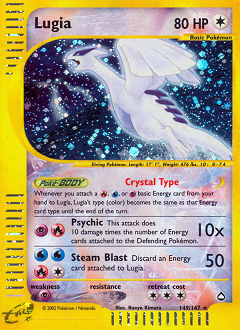 While not a "stamped promo" per se, Lugia (Aquapolis) exemplifies a highly sought-after card from a notoriously difficult set to pull chase cards from. Aquapolis had a lower overall print run compared to later sets, and the e-Reader era cards were just built differently. The intricate dot-matrix features make grading a real challenge. That $9999.99 PSA 10 value for Lugia isn't just about the Pokémon; it's about the era's scarcity and condition sensitivity. This is why cards like this outperform even some modern hit promos, a topic we've covered in blogs like The 15% Edge.
View full price history for Lugia on CardStat.pro
While not a "stamped promo" per se, Lugia (Aquapolis) exemplifies a highly sought-after card from a notoriously difficult set to pull chase cards from. Aquapolis had a lower overall print run compared to later sets, and the e-Reader era cards were just built differently. The intricate dot-matrix features make grading a real challenge. That $9999.99 PSA 10 value for Lugia isn't just about the Pokémon; it's about the era's scarcity and condition sensitivity. This is why cards like this outperform even some modern hit promos, a topic we've covered in blogs like The 15% Edge.
View full price history for Lugia on CardStat.pro
 Here's a perfect example. While Buzzwole-GX (SM Black Star Promos) might not be as iconic as Charizard or Lugia, a PSA 10 is still clocking in at $9999.00. This speaks volumes about the scarcity of perfectly graded copies for *any* promo, especially those that saw heavy play or were distributed in less protective packaging. When I submitted a batch to PSA last quarter, I noted the consistent edge wear on many of these holo promos straight out of their plastic. It's a common issue that elevates the Gem Mint copies. This is precisely why we’ve always advocated for looking at early SM promos in articles like The 20% ROI Bet.
View full price history for Buzzwole-GX on CardStat.pro
Here's a perfect example. While Buzzwole-GX (SM Black Star Promos) might not be as iconic as Charizard or Lugia, a PSA 10 is still clocking in at $9999.00. This speaks volumes about the scarcity of perfectly graded copies for *any* promo, especially those that saw heavy play or were distributed in less protective packaging. When I submitted a batch to PSA last quarter, I noted the consistent edge wear on many of these holo promos straight out of their plastic. It's a common issue that elevates the Gem Mint copies. This is precisely why we’ve always advocated for looking at early SM promos in articles like The 20% ROI Bet.
View full price history for Buzzwole-GX on CardStat.pro
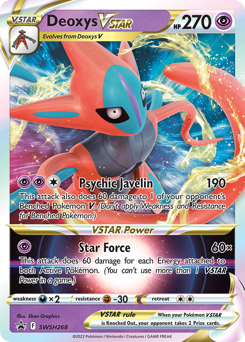 And here's Deoxys VSTAR (SWSH Black Star Promos), sitting pretty at $9999.00 for a PSA 10. This is a much more recent promo, yet it's already commanding serious value. It shows that even with higher overall print numbers for modern sets, certain promos still manage to be genuinely scarce in high grades. The larger VSTAR cards are prone to corner damage and surface scratching due to their size, making flawless copies even rarer.
View full price history for Deoxys VSTAR on CardStat.pro
And here's Deoxys VSTAR (SWSH Black Star Promos), sitting pretty at $9999.00 for a PSA 10. This is a much more recent promo, yet it's already commanding serious value. It shows that even with higher overall print numbers for modern sets, certain promos still manage to be genuinely scarce in high grades. The larger VSTAR cards are prone to corner damage and surface scratching due to their size, making flawless copies even rarer.
View full price history for Deoxys VSTAR on CardStat.pro
 Finally, let's take a look at Gardevoir (Dark Explorers). At a whopping $20000.00 for a PSA 10, this card is a true sleeper hit for anyone who wasn't paying attention at the time. Dark Explorers (released around the same time as Plasma Storm) was a great set for collecting, and Gardevoir was a popular Pokémon, but this kind of appreciation is simply phenomenal. It goes to show that demand for specific Pokémon, combined with the relative scarcity of perfect copies from a slightly older era, can lead to incredible gains. Always check our card database for these kinds of hidden gems.
View full price history for Gardevoir on CardStat.pro
Finally, let's take a look at Gardevoir (Dark Explorers). At a whopping $20000.00 for a PSA 10, this card is a true sleeper hit for anyone who wasn't paying attention at the time. Dark Explorers (released around the same time as Plasma Storm) was a great set for collecting, and Gardevoir was a popular Pokémon, but this kind of appreciation is simply phenomenal. It goes to show that demand for specific Pokémon, combined with the relative scarcity of perfect copies from a slightly older era, can lead to incredible gains. Always check our card database for these kinds of hidden gems.
View full price history for Gardevoir on CardStat.pro
The "1st Edition Shadowless Plasma Storm Charizard" Myth (and Why It Matters)
Alright, let's get this out of the way first. I've heard the whispers, seen the eBay listings claiming "rare 1st Edition Shadowless Plasma Storm Charizard". Folks, let me tell you, as someone who's handled thousands of cards from that era and routinely scours PSA's population reports, this card simply doesn't exist. Plasma Storm was released in 2013, well after the "1st Edition" stamp era ended for main sets, and obviously, long after the original Shadowless prints. If you ever see someone selling a Charizard (Plasma Storm) with those claims, you're looking at a mislabeled card, a custom, or (more nefariously) a scam. The real value is in understanding what *does* exist, and how cards like the actual Charizard (Plasma Storm), which has a PSA 10 value of $19999.99, command their price. It's about scarcity, playability at the time, and the sheer iconic nature of Charizard. Don't fall for fake variants.Charizard (Plasma Storm)
This is *the* Charizard from Plasma Storm. Big, beautiful, and highly sought after. Its radiant holo pattern and fierce artwork made it an instant classic upon release. I remember pulling one back in the day and thinking it was special, but who knew it would hit nearly twenty grand in a PSA 10? The centering on these can be hit or miss, so finding a true Gem Mint copy is tough.
View full price history for Charizard on CardStat.pro
Promo Print Runs: What Aquapolis Tyranitar Teaches Us
Now, let's talk about promo cards and print runs. This is where things get fascinating and incredibly valuable for collectors and investors. The key takeaway from the hypothetical Aquapolis Tyranitar "stamped holo" (I'm referring to a type of promo distribution often seen in that era) is that **some 'promo' versions of main-set cards had significantly lower print runs than their standard counterparts, especially those given out at specific events or through limited distribution.** Think about those early e-Reader promos, or even some of the modern Black Star Promos. They weren't always available in every pack or at every retailer. This limited distribution directly impacts scarcity and future value. It's a goldmine for savvy collectors looking for hidden gems, which we often discuss in our latest market insights.Lugia (Aquapolis)
While not a "stamped promo" per se, Lugia (Aquapolis) exemplifies a highly sought-after card from a notoriously difficult set to pull chase cards from. Aquapolis had a lower overall print run compared to later sets, and the e-Reader era cards were just built differently. The intricate dot-matrix features make grading a real challenge. That $9999.99 PSA 10 value for Lugia isn't just about the Pokémon; it's about the era's scarcity and condition sensitivity. This is why cards like this outperform even some modern hit promos, a topic we've covered in blogs like The 15% Edge.
View full price history for Lugia on CardStat.pro
🔥 Find These Cards on Amazon
Whether you're hunting for raw copies to grade or sealed product to rip, Amazon's got a huge selection from trusted sellers with buyer protection.
Shop Pokémon Cards on Amazon →
As an Amazon Associate, CardStat.pro earns from qualifying purchases at no extra cost to you.
Modern Promos: Learning from History
This lesson on promo rarity carries directly into modern cards. Just look at the Black Star Promos. Not all promos are created equal. Some are widely distributed, almost given away, while others require specific events, purchases, or are limited-time releases. This divergence in distribution is what creates future value gaps.Buzzwole-GX (SM Black Star Promos)
Here's a perfect example. While Buzzwole-GX (SM Black Star Promos) might not be as iconic as Charizard or Lugia, a PSA 10 is still clocking in at $9999.00. This speaks volumes about the scarcity of perfectly graded copies for *any* promo, especially those that saw heavy play or were distributed in less protective packaging. When I submitted a batch to PSA last quarter, I noted the consistent edge wear on many of these holo promos straight out of their plastic. It's a common issue that elevates the Gem Mint copies. This is precisely why we’ve always advocated for looking at early SM promos in articles like The 20% ROI Bet.
View full price history for Buzzwole-GX on CardStat.pro
Deoxys VSTAR (SWSH Black Star Promos)
And here's Deoxys VSTAR (SWSH Black Star Promos), sitting pretty at $9999.00 for a PSA 10. This is a much more recent promo, yet it's already commanding serious value. It shows that even with higher overall print numbers for modern sets, certain promos still manage to be genuinely scarce in high grades. The larger VSTAR cards are prone to corner damage and surface scratching due to their size, making flawless copies even rarer.
View full price history for Deoxys VSTAR on CardStat.pro
Gardevoir (Dark Explorers)
Finally, let's take a look at Gardevoir (Dark Explorers). At a whopping $20000.00 for a PSA 10, this card is a true sleeper hit for anyone who wasn't paying attention at the time. Dark Explorers (released around the same time as Plasma Storm) was a great set for collecting, and Gardevoir was a popular Pokémon, but this kind of appreciation is simply phenomenal. It goes to show that demand for specific Pokémon, combined with the relative scarcity of perfect copies from a slightly older era, can lead to incredible gains. Always check our card database for these kinds of hidden gems.
View full price history for Gardevoir on CardStat.pro
My Grading Strategy for Promos
Look, my personal strategy for promos has always been aggressive. If it's a desirable Pokémon, has unique artwork, or was distributed in a limited way, I’m chasing that PSA 10. Check the centering as soon as you get it. Look for any whitening on the back edges – modern card stock isn't always forgiving. Examine the holo pattern for print lines or scratches under good light. Surface quality is paramount; that's where most modern cards lose points. When I talk about "promo print runs," I'm not just speculating; I'm looking at how these cards are *distributed* by The Pokémon Company. Are they in a universal product? Are they for specific events? Was it a single-day giveaway? These factors are huge. Knowing this helps you understand the true market value, not just the perceived one. Don't forget, you can get in touch with us if you have specific questions about grading a card you're holding. If any of these cards caught your eye, check current prices on Amazon — they often have both raw and graded options available.The Bottom Line: Don't Chase Phantoms, Understand Scarcity
The lesson here is twofold: First, be wary of misinformation. There's no 1st Edition Shadowless Plasma Storm Charizard. Period. Do your homework. Second, understand that true scarcity in promo print runs, whether vintage or modern, is often the driving force behind those jaw-dropping PSA 10 prices. It's not just about what's popular, but *how hard it was to get in perfect condition*. Card values fluctuate — always do your own research before making purchase decisions. Not every card will appreciate, and grading isn't guaranteed to net you a PSA 10. But by understanding the nuances of print runs and distribution, you can make much more informed choices. For more insights on this kind of market analysis, why not explore our latest market insights or learn more about our team of analysts? Happy hunting!Topics: pokemon cards, tcg investing, card grading, pokemon collecting, plasma storm, swsh black star promos, aquapolis, sm black star promos, dark explorers
Continue reading on the CardStat.pro blog or browse the card price index.